Shopping for and choosing the CMS for a new website can quickly become a technology conversation. We think it should start as a brand and business. How ambitious does the experience need to be? What does it need to connect to? Who will manage it? And how will it need to evolve?
We work across WordPress, HubSpot and headless builds (and more) because there isn’t one right answer. Each has its strengths but the trick is knowing which ones actually matter to you, your team and your business. So what is the right answer to WordPress vs HubSpot vs Headless CMS?
WordPress – the flexible, proven default CMS
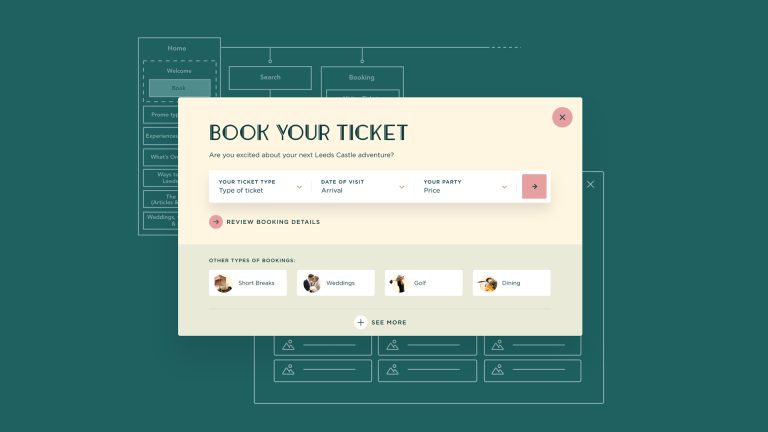
There’s a reason WordPress remains our most common recommendation – it powers more than 41% of the entire web and almost 60% of websites with a known CMS, giving it an enormous ecosystem of developers, integrations and tools. It’s mature and hugely flexible which means almost anything is achievable without reinventing the wheel. We’ve built many WordPress websites integrated with everything from ActiveCampaign and Microsoft Dynamics to CiviCRM, Salesforce, Zoho and much more, which speaks to how adaptable the platform is to a client’s existing tech stack. For projects including Leeds Castle and Strong Cities Network, it has allowed us to create very different digital experiences while giving internal teams a familiar, flexible way to manage them.
Its occasional reputation for poor security often has more to do with how a website has been built or hosted rather than the WordPress platform itself. Obviously being the world’s most popular CMs, it’s more suseptible to attacks, but if the architecture considered, the plugins under control and the build quality high, it remains a very powerful platform.
In summary, if you want flexibility, straightforward content management and a platform that can comfortably grow with you, WordPress could be the one.
HubSpot CMS, for when marketing and sales need to be one system
Sometimes the website isn’t really the centre of the problem but the connections behind it are. HubSpot CMS makes most sense when marketing, sales and the website need to work as one. Content, forms, CRM data, lead nurturing, automation and reporting can all sit within the same ecosystem rather than being stitched together afterwards. More than 99% of HubSpot CMS websites with identifiable analytics technology also use HubSpot analytics, which gives you a good indication of where its real strength lies.
We’ve moved a few websites onto HubSpot specifically to bring content, forms, lead data and marketing automation together, creating a clearer journey from website visitor to lead.
The trade-off is its greater cost and being less flexibility than WordPress, but if your marketing team already lives in HubSpot, there’s a strong argument for your website to live there too.
So, if your CRM, marketing automation, lead generation and website need to behave as one connected system, it might be a good idea to go with Hubspot CMS.
Headless CMS – built for speed, scale and brand ambition
Headless isn’t really another CMS choice but more a different approach to building the website. By separating the content management system from the front end, we get much greater freedom over how the digital experience looks, moves and behaves. That can be particularly powerful during a rebrand, when the website needs to become one of the strongest expressions of the new identity rather than simply somewhere the new logo appears.
For urllo, our rebrand of global URL infrastructure business EasyRedir, we used Sanity with Next.js to create a faster, more distinctive digital experience with far fewer creative constraints.
It also means content isn’t tied to a particular page or even a particular website. The same structured content can potentially power websites, apps and other digital experiences.
However, it comes with a level of complexity. Headless requires a more bespoke development approach and the editing experience needs to be designed just as carefully as the front end.
If performance, scalability and creative freedom matter enough to justify a more bespoke build then it’s worth considering.
So which is right for your web project?
The honest answer depends on three things – what are your marketing team comfortable with, how ambitious the digital experience needs to be and who’s going to run the site day to day.
We don’t have a single CMS we reach for on every rebrand or web project. The right technology is the one that fits your brand, your team and your ambitions, because nobody visits your website hoping you’ve chosen a really good CMS. They just want a really good website.
If you’re weighing up platforms for an upcoming erb project or rebrand and want an honest, technology-agnostic recommendation, we’d love to talk.