
July 9th, 2025
We’ve helped FMCG brands grow from early-stage ambition to commercially ready and retail-listed. That’s included shaping strategy, building out brand systems, and delivering creative that drives awareness, engagement and sales.
If you’re developing a new proposition, planning a rollout or looking to improve performance across touchpoints, here are seven principles to help guide your thinking, drawn from our work with fast-moving FMCG teams.
1. Anchor your brand in one clear idea.
Too many FMCG brands try to say too much.
A strong brand begins with a single-minded creative proposition that drives messaging, design, tone and campaign thinking across every touchpoint.
That’s how we helped Cawston Press evolve. The “Remarkably Good” proposition we came up with together became a creative standard, rather than a marketing tagline. It gave the team clarity, gave partners alignment and set the tone across everything from retail materials to seasonal campaigns. In fact, we created a brand book around the proposition.
Tip: Pressure-test your core idea. Can it live on a shelf, on social or in a sales meeting? If not, simplify.

2. Design for the way people shop and scroll.
Visual systems need to work in real life, not just in pitch decks.
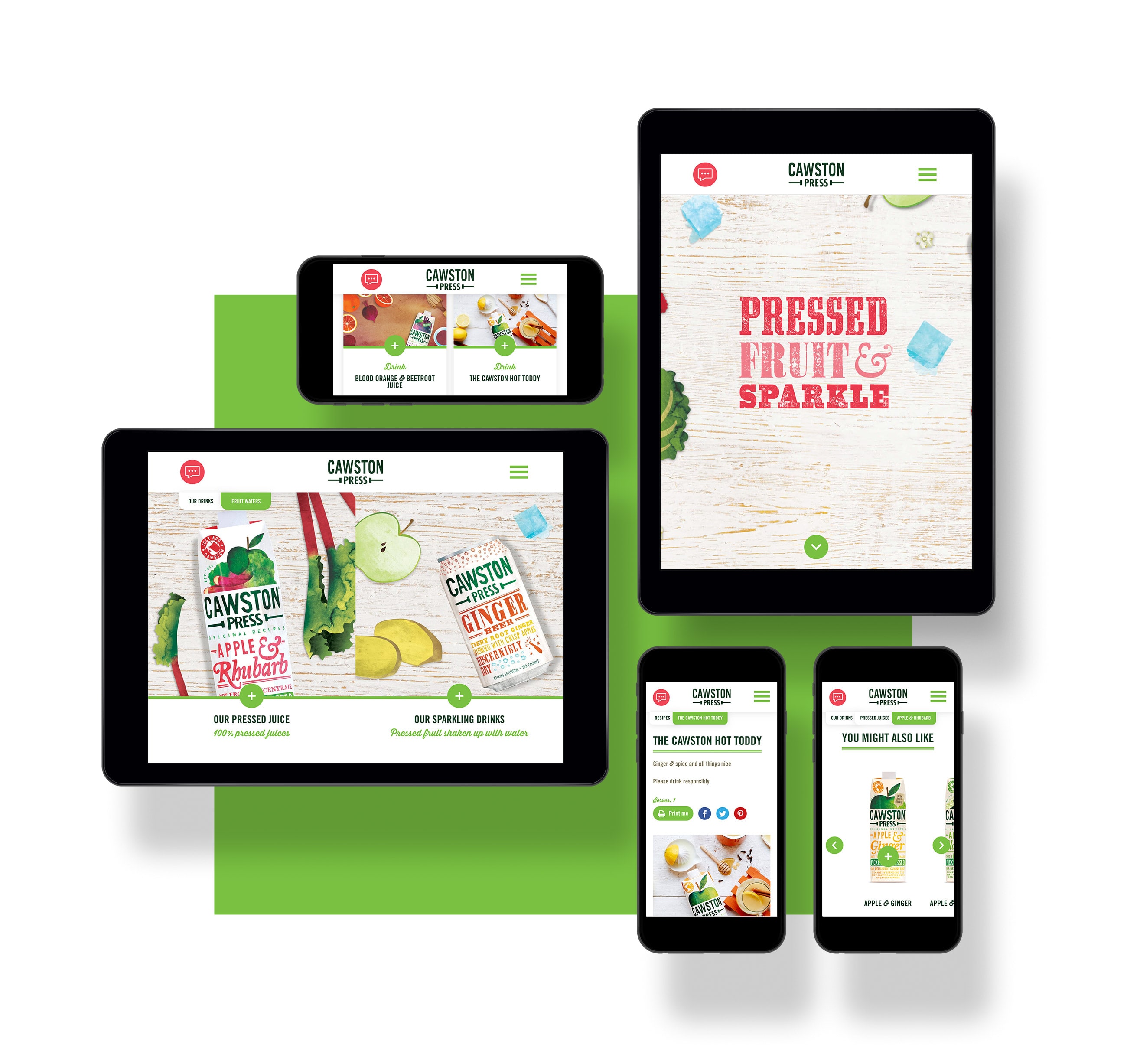
We helped Cawston Press create a mobile-first site, a full suite of marketing assets as well as branded experiences that made them instantly recognisable in-store and on the move. From retail windows to trade tools, consistency across every format amplified their credibility.
Tip: Verify whether your current design system is consistent across various formats. Does your shelf presence match your online content? Would a buyer recognise you from your deck alone?
3. Use content to build traction, not just noise.
You don’t need to be loud. You need to be relevant.
For No.1 Living, we developed a content strategy that was simple, sharp and on-brand. The result was an awareness turnaround on social platforms in just four months:
• 1.1m impressions
• 17.5% follower increase
• 136% lift in Instagram engagement
• 457% more messages and DMs
Content was created with confidence and value in mind. Whilst consistency is key in being at the forefront of the audiences’ minds, we didn’t want to just create volume in throwaway content.
Tip: Don’t treat social as an afterthought. Treat it like a key part of your brand system. Build it with the same intent as your packaging or brand deck. And make sure each post offers value to your audience. If you’ve got nothing good to say, don’t say it.

4. Make your brand partnership buyer-ready.
A brand that looks trade-ready performs better in every room.
With Cawston Press, we shaped toolkits for B2B, crafted trade decks and created assets for everything from point-of-sale to Whole Foods activations. All whilst having the end audience, the customer, in mind.
Tip: Create a version of your brand that speaks directly to buyers. Make it easy for them to understand your values, story and operational credibility, without needing a meeting. Have their customers in mind – where is the value?

5. Don’t treat your agency like a vendor, treat them like a team.
We work in weekly creative sprints, with mid-week reviews, using shared tools, constantly gathering real-time feedback.
That collaborative rhythm is how we’ve delivered complex, multi-channel work for FMCG brands without slowing their momentum. It also means fewer surprises and more alignment between your team and ours.
Tip: Speed is essential, but it’s nothing without sync. Set up regular check-ins and create space for real-time thinking and build momentum. That’s where the best ideas come from.
6. Plan for long-term consistency, even when you’re in growth mode.
With both Cawston Press and No.1 Living, we’ve supported everything from small tactical briefs to brand-wide rollouts.
The strength of those brands came from consistency, ensuring that every asset, campaign, or activation still felt like them. That only happens when the creative system is built to flex, not fracture.
Tip: Don’t outgrow your own brand. Build a system that can scale, visually, verbally and strategically, without losing its core.
7. Turn your eComm site into a brand experience.
For growing FMCG brands, having a functional e-commerce website isn’t enough. It needs to feel like an extension of the brand.
We helped MOMA evolve its brochure-wear website into and online store and complete brand destination. We wanted to create an immersive environment that matched the tone of their social channels and extended their brand experience from Instagram to checkout.
Clear navigation, engaging content and conversion-driven UX ensured the website could serve both existing fans and new audiences that were discovering the brand for the first time.
Tip: Don’t treat your website as a digital shop window. Treat it as a space to build loyalty, reinforce your brand message and drive repeat purchases.

Looking to take your FMCG brand to the next stage?
We’ve worked alongside in-house teams to help brands launch, grow and evolve, with practical tools and creative strategies that actually fits internal workflows.
If you’re ready to build a brand that performs on shelf, online and in partnership, let’s have a conversation.


