August 4th, 2025
Many visitor attractions still treat their websites as brochures. Informative, yes, but rarely engaging. Audiences now expect more – they want digital experiences that are intuitive, useful and emotionally relevant. A digital platform should do more than present information, it should connect people with purpose, encourage action and build loyalty on an emotive and value-based level.
Here’s a few examples of how we helped a few brands achieve just that.
Build with purpose from the start.
A successful website needs more than good design, it needs clear intent. From the first interaction, it should reflect your mission and invite people to take action.
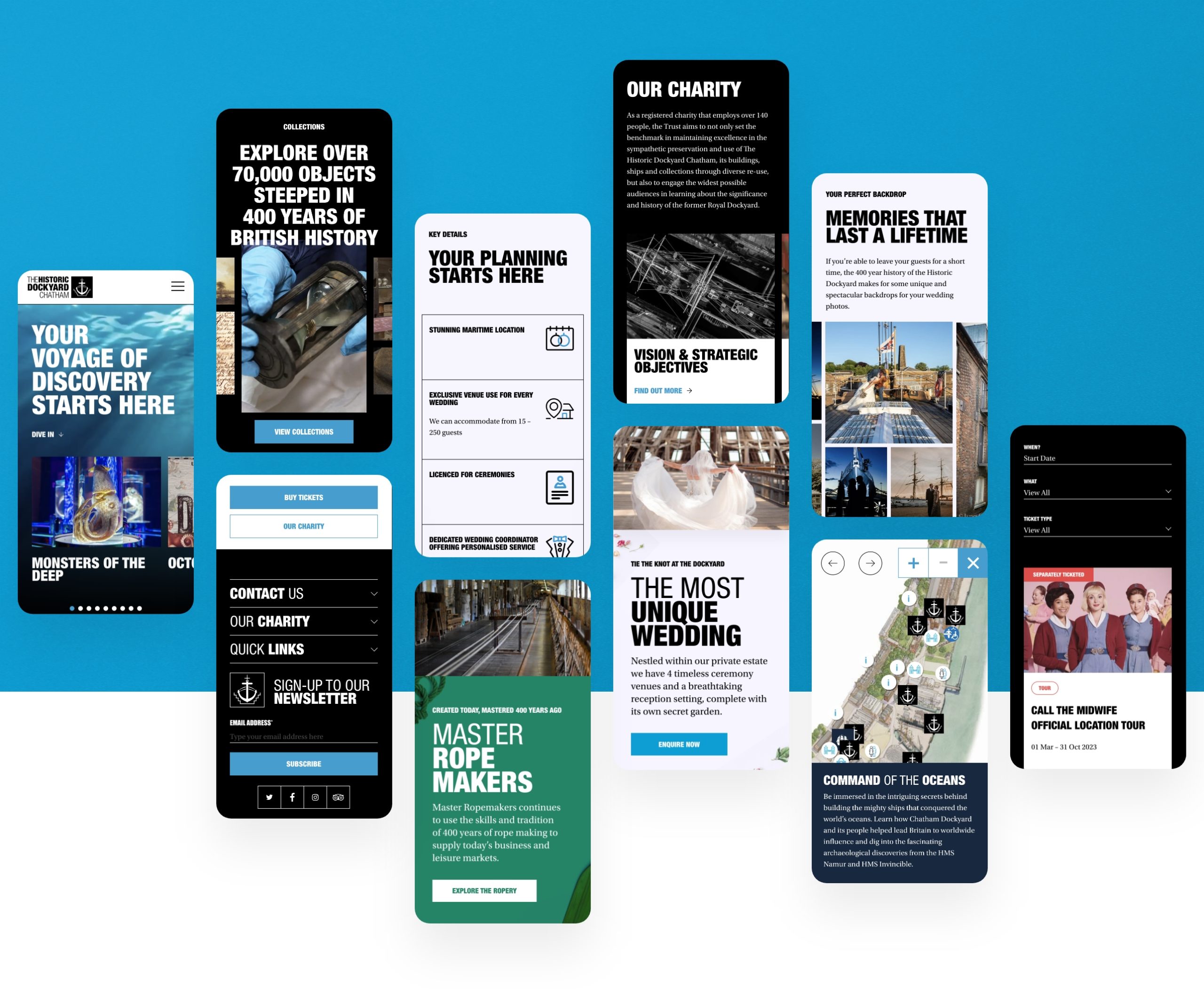
For the Historic Dockyard Chatham, the homepage was restructured to highlight its independent charitable status. This included a dedicated charity section that made the organisation’s mission, education work and preservation goals visible and actionable. Calls to support the Dockyard, whether through donations, joining or getting involved, were naturally embedded into the user journey.
We start projects by aligning platform goals with real-world impact:
- Inspiring visitors to visit, join, donate or get involved
- Giving clear reasons to return and explore more
- Supporting internal teams with tools that reduce workload
A platform with a purpose works harder for everyone.
Design for journeys not templates.
Good user experience in web design feels natural, clear and rewarding. How a website looks is important, but how it is used should always be the main focus.
With Leeds Castle, we mapped user flows early in the project. This allowed us to create page-level CTAs that adapted to the context, whether a visitor was exploring weddings, purchasing tickets or checking event availability. The result was a booking journey that felt both personal and efficient across desktop and mobile platforms regardless of visitor need.
Well-designed journeys should:
- Anticipate different user needs and behaviours
- Connect pages logically, leading visitors toward meaningful outcomes
- Integrate with tools like booking systems, CRMs and event platforms
A good website doesn’t just look good, it moves people forward throughout the entire journey.

Empower your team to own it.
If your internal team can’t update the website easily, it will quickly become a neglected asset.
For Chatham Historic Dockyard, we ran a series of workshops with internal teams during the project’s discovery phase. This informed both frontend design and backend flexibility, ensuring staff could manage content confidently without technical bottlenecks. The result was a website that empowered them to grow, adapt and launch campaigns independently.
We provided:
- Easy-to-use drag-and-drop layouts, with pre-styled components
- Reusable modules to save time and ensure consistency
- Role-based access, so the right people manage the right content
A platform that’s easy to manage stays relevant but most importantly, utilised.
Focus on the details that define UX.
Small features often define the experience. Get them right and the whole platform becomes easier to use for both visitors and your team.
At Hever Castle, UX was designed to support fast access to bookings, event details, memberships and merchandise, without ever overwhelming the user. The sitemap was restructured to allow clear segmentation of audience needs, while maintaining cross-sell opportunities throughout. The website for Chatham Dockyard featured an interactive map to explore ships, museums and exhibits, making the online experience feel as rich as an onsite visit.
Features and functionality included:
- Integrated maps for exploring venues, reserves or points of interest
- Advanced search and filters that help users find what matters
- Custom forms for newsletter sign-ups, donations, competitions and more
- Real-time SEO and accessibility checks that are built into the CMS
These tools support discoverability, inclusivity and internal efficiency, maximising user experience and offering value beyond information.
Plan for growth and flexibility.
Your digital platform should evolve as your needs change. That means building in adaptability from the start.
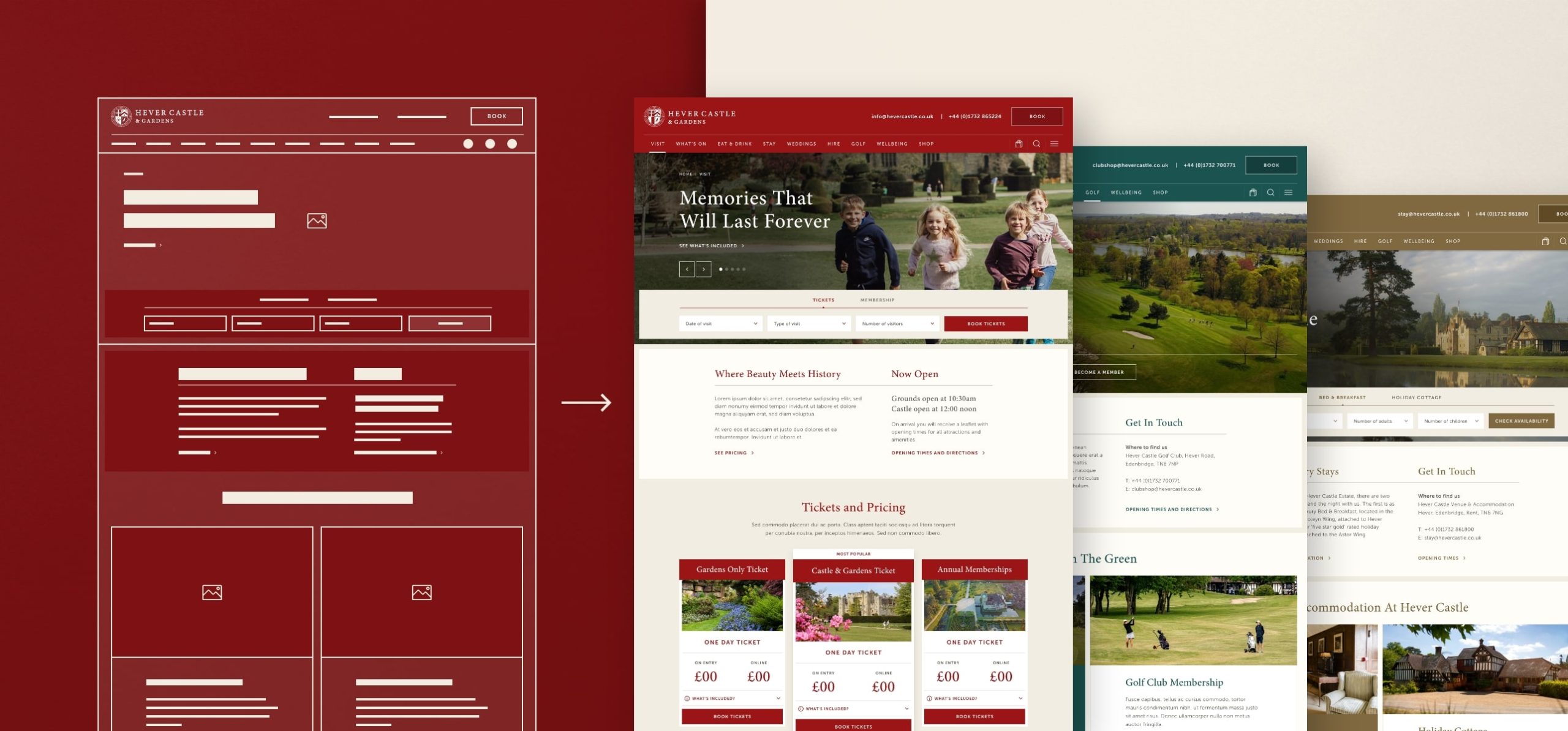
Leeds Castle’s website was designed using a modular approach, allowing it to flex easily across different parts of the brand. Weddings, events and corporate hire pages each had distinct design treatments and colours, while maintaining a consistent user experience. This gave their team flexibility without sacrificing brand coherence.
How we scalescale without constant rebuilds:
- Clean, efficient code with minimal plugin dependency
- Scalable frameworks that grow with you
- AI tools for tagging, content suggestions and intelligent search
- SEO-safe redirect planning and strong performance optimisation
A future-proof website supports your team and your audience equally.
Make your website a living hub.
Your platform should reflect the energy, purpose and character of your destination and brand. It should be a digital version of the real life experience.
With Hever Castle, the website became a digital gateway into the historic childhood home of Anne Boleyn, designed to appeal to a broad audience including families, history lovers and event organisers. Its immersive design brought the brand to life while remaining simple to use and accessible across devices.
Great platforms should:
- Support multiple audiences without clutter or confusion
- Combine brand storytelling with clear actions
- Reflect the full personality and purpose of the organisation
When your website reflects the real-world richness of your destination, it earns return visits and long-term trust.
Ask yourself: Is your digital platform just telling your story, or helping people take part in it?
If it’s the latter, you’re on the right track.
If you’re ready to build a brand that performs on shelf, online and in partnership, let’s have a conversation.


