arrow-circle arrow-down-basicarrow-down arrow-left-small-white arrow-left-small arrow-left arrow-right-small-white arrow-right-small arrow-right-white arrow-right arrow-up arrow closefacebook instagram linkedin new-tab pinterest quote search tick-small tick twitter whatsapp video-icon

ProfitroomUX, Website Design & Branding

Inspiring reservations without reservation

Helping independent hotels reconnect with their guests in a world dominated by online travel agents.

As the hospitality industry emerged from the challenges of the pandemic, independent hotels faced a growing battle to regain control of their guest relationships. Online travel agents had become increasingly dominant, making it harder for hotels to own the booking journey, build loyalty and communicate directly with customers.

Profitroom set out to change that. Our brief was to evolve the brand and redesign the website, creating a premium digital experience that reflected the aspirations of luxury hoteliers while positioning Profitroom as the trusted technology partner helping hotels reclaim direct bookings.

The heartbeat
A reservation should begin with confidence. That thinking inspired the proposition, Reservations without reservation. It captures both the ease of the booking experience Profitroom delivers and the confidence it gives hoteliers to reconnect with their guests without relying on third-party booking platforms.

The proposition also marked a shift in the brand itself. Instead of leading with revenue and software features, we repositioned Profitroom around a more human purpose: giving the power of reservations back to the hotelier. That purpose informed every part of the digital experience.

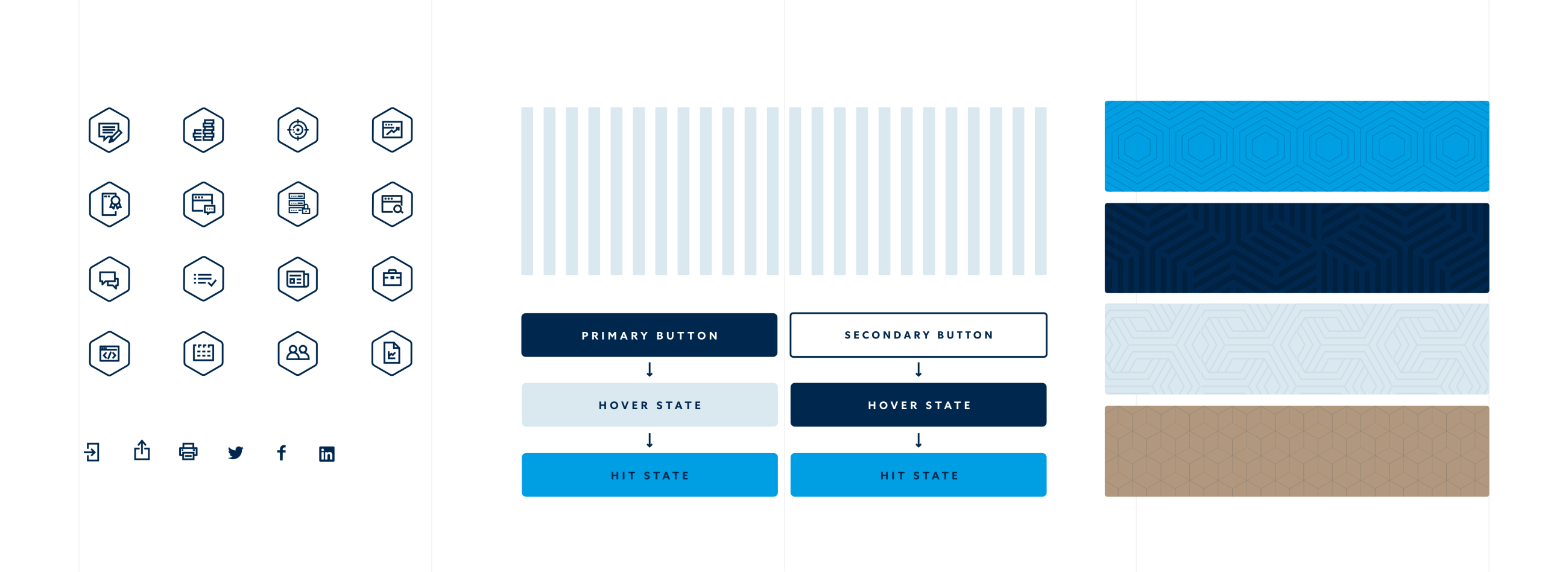
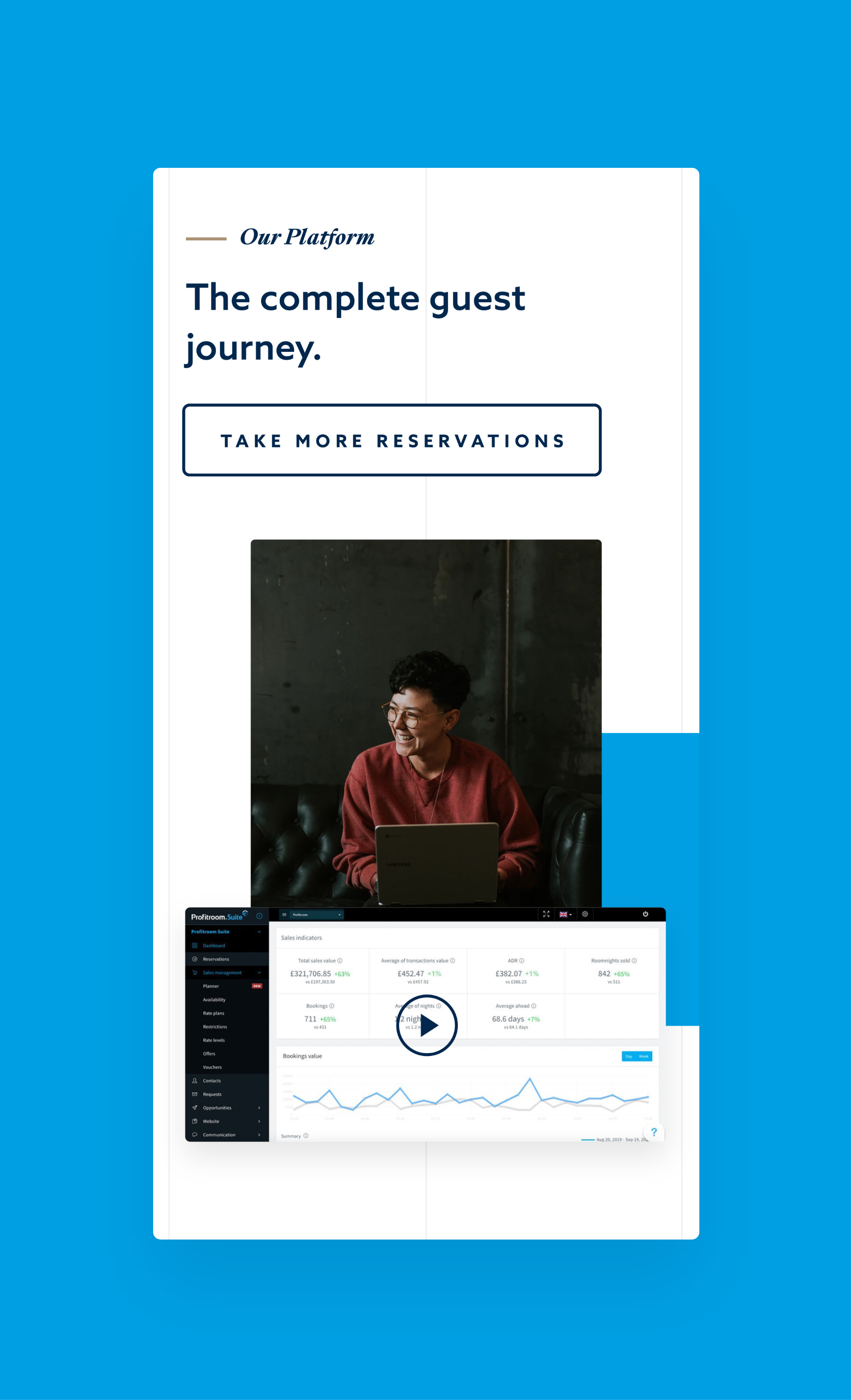
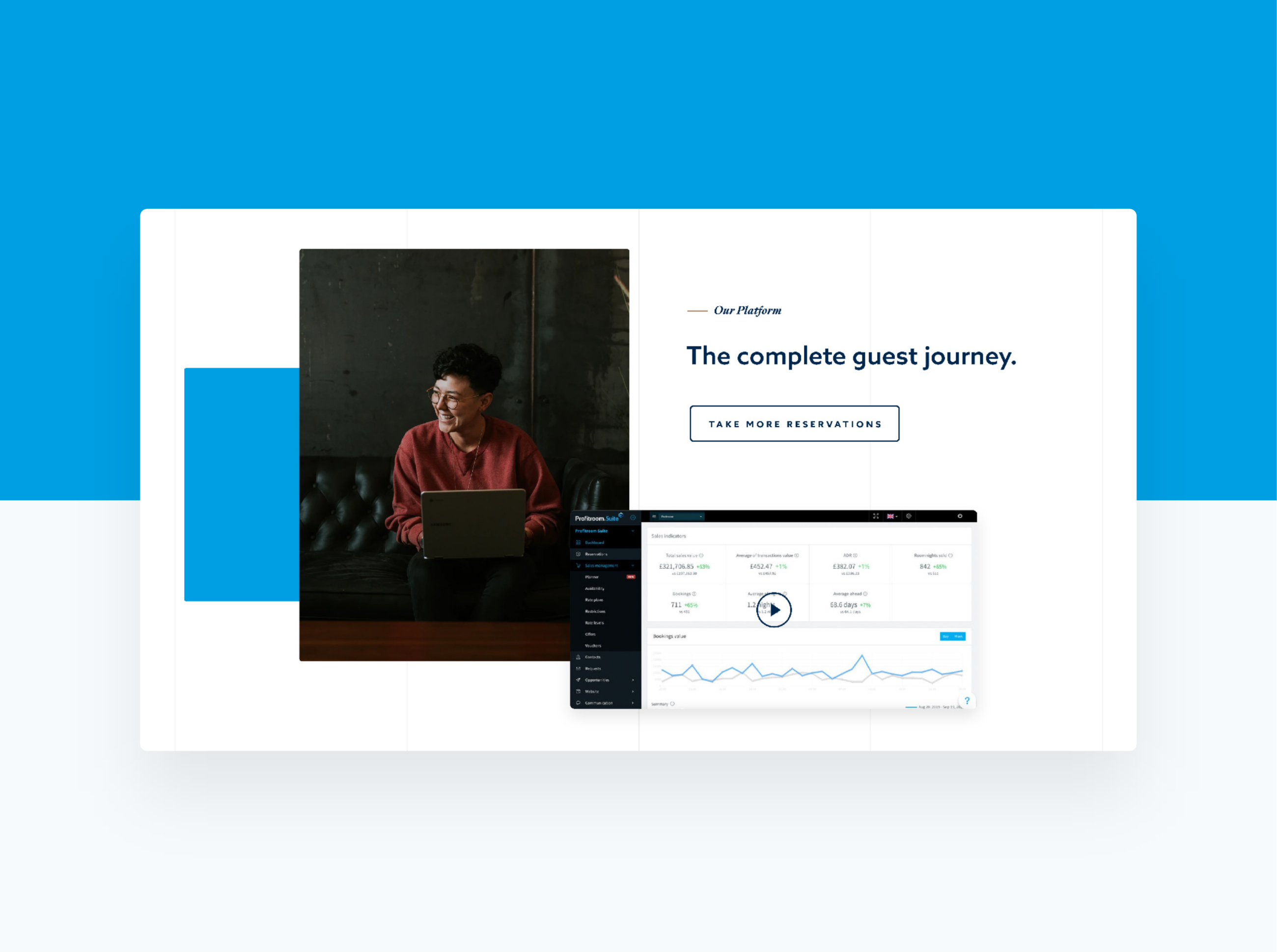
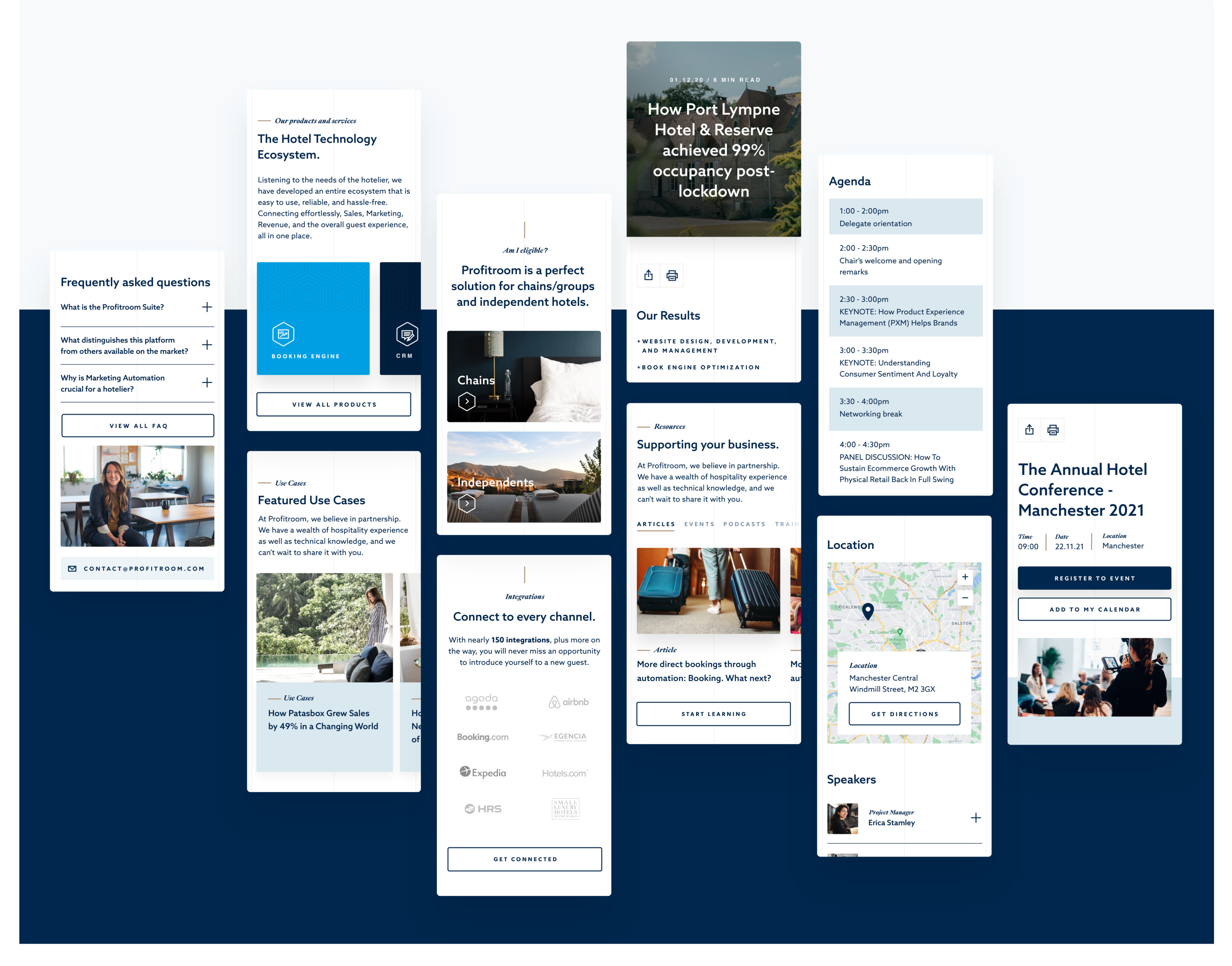
The website was designed around the needs and aspirations of premium hotels. Clear user journeys, carefully considered information architecture and an elegant visual language help visitors quickly understand the platform while reflecting the quality and professionalism expected by Profitroom’s audience. Across every device, the experience balances business objectives with user needs, creating a website that feels as effortless as the booking journey it promotes.

The impact
The new brand and website repositioned Profitroom from a software provider to a strategic partner for the hospitality industry, creating a stronger emotional connection with independent hotels and reinforcing its role in driving direct bookings.

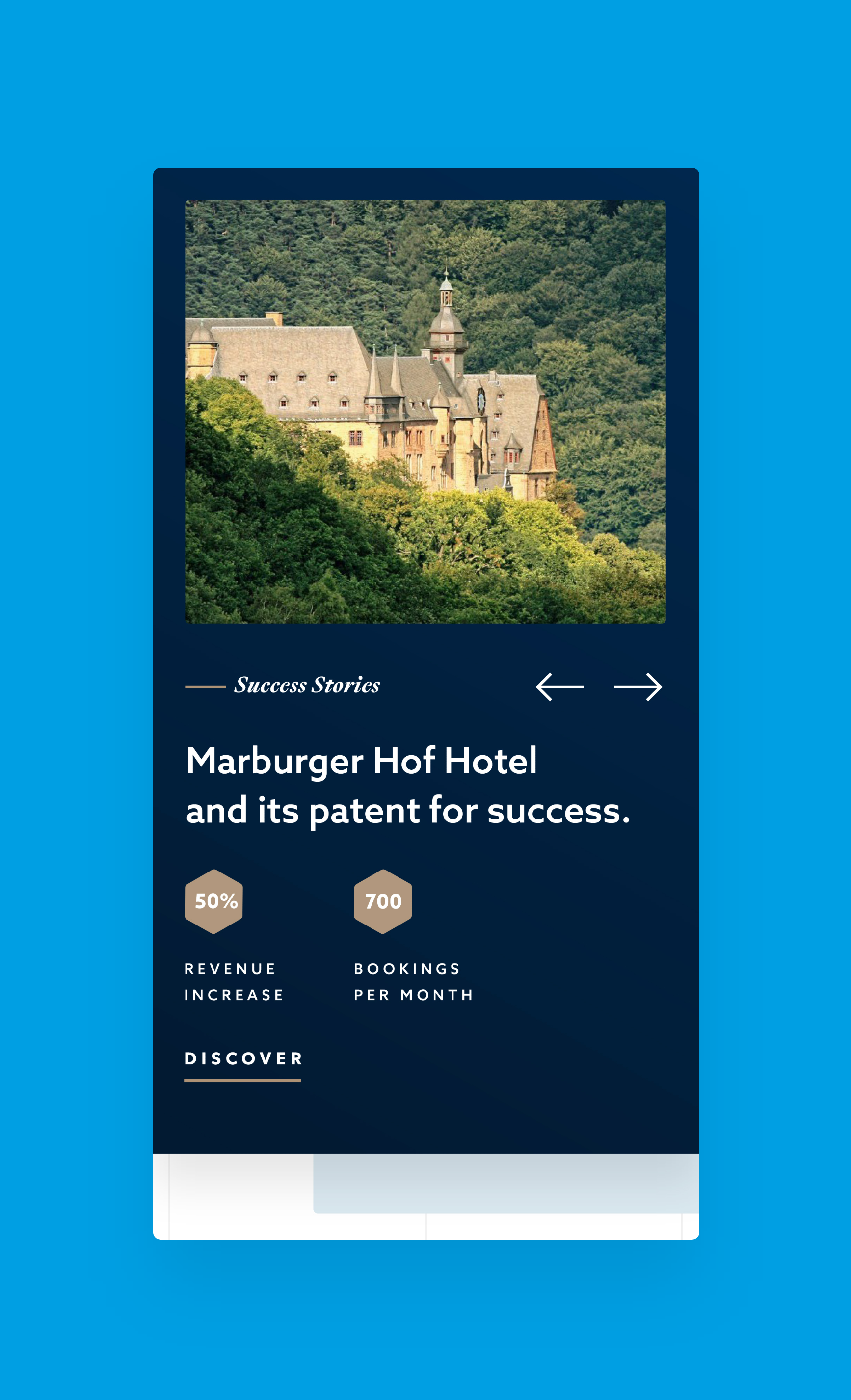
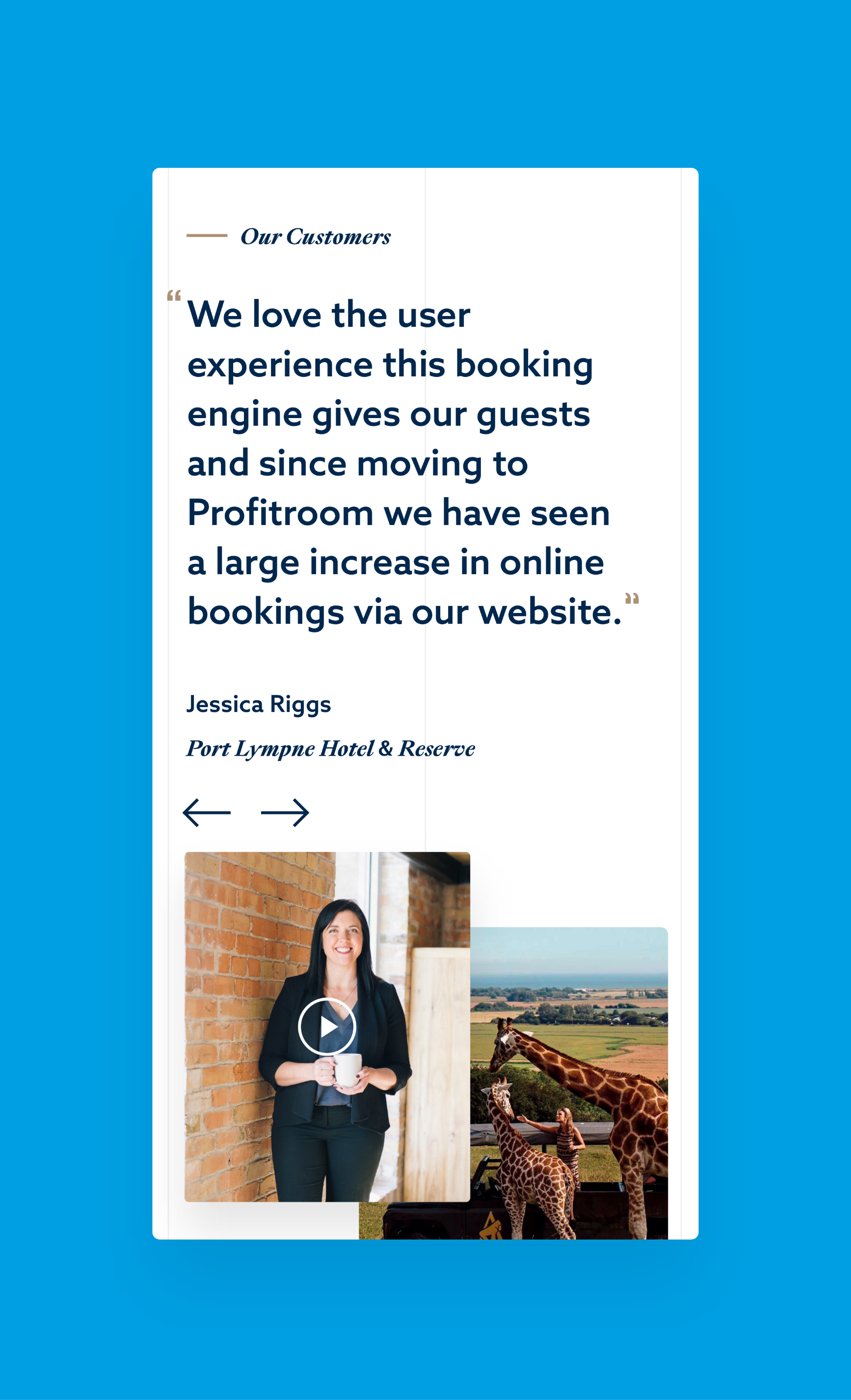
The clearer positioning, premium user experience and more purposeful brand narrative have supported Profitroom’s continued international growth. Today, the company works with more than 4,500 hotels across 55 countries, helping hospitality businesses strengthen guest relationships and increase direct reservations through market-leading booking technology.
Redefining brand purpose

The previous purpose of the brand was all revenue driven and about maximising profits. Although this is important, it felt short-term, cold and corporate.

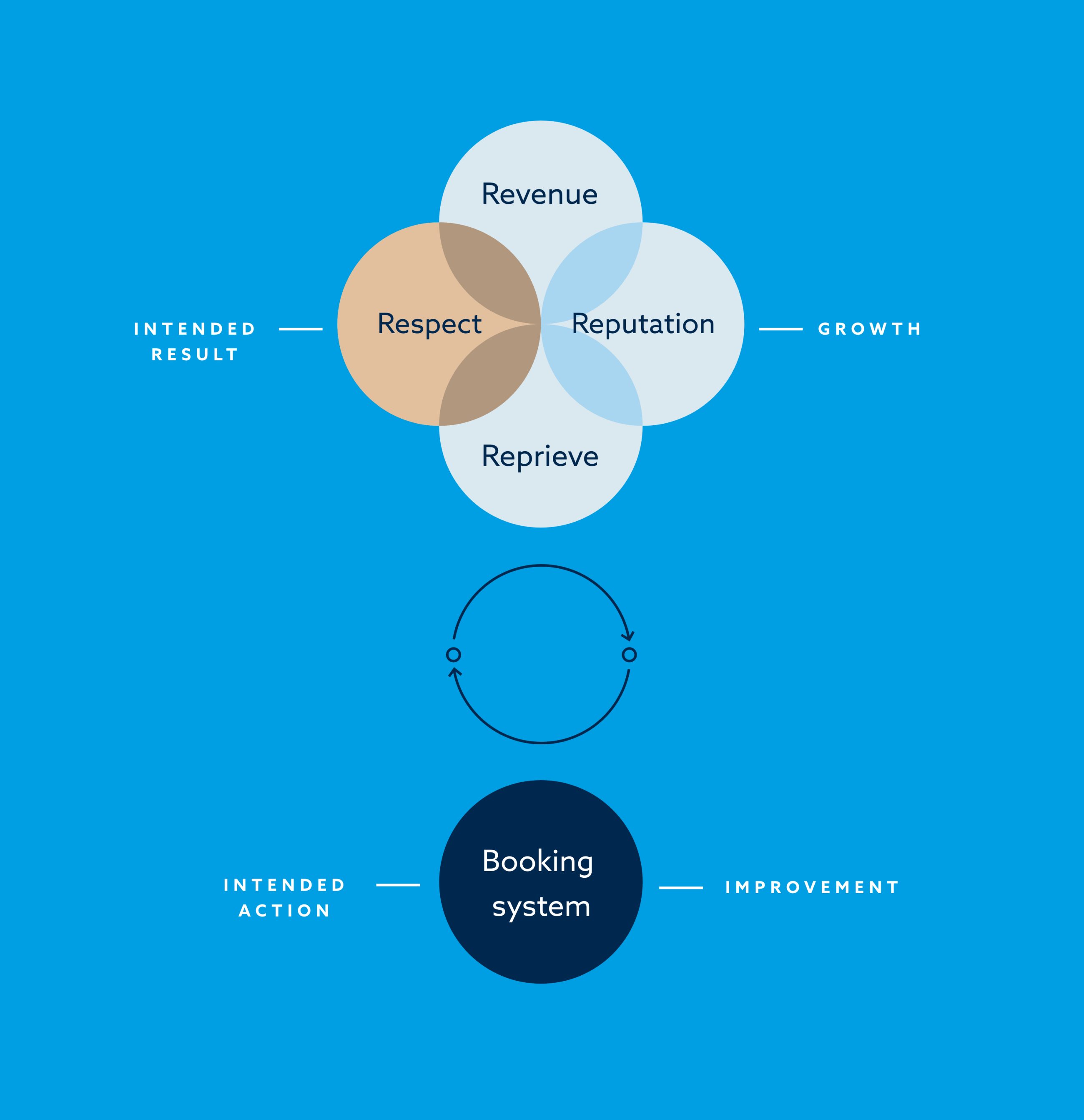
We redefined the purpose to make it not only about revenue but also about reputation, respect and respite – “Giving the power of reservations back to the hotelier.”

The purpose is now much more humanistic and long-term in its vision, emotive and empowering. It is focussed on the user outside of profit margins, giving them more control over their business and saving them on third party expenditure.

Unify UX and UI to serve a brand narrative

The hotel booking process is the first and the most fundamental step in a guest’s journey, from booking to checkout. It is the key to the success of any hotel business. That’s why it’s critical to present Profitroom as a digital expert who demonstrates explicit and concise knowledge of the hotelier’s products and services. This insight and exploration formed the foundation of the site’s architecture and user experience. The idea is that Profitroom not only is the most premium and best performing SaaS platform on the market, but employing it can make everything easier, taking away the stress and working hard for the hotelier.

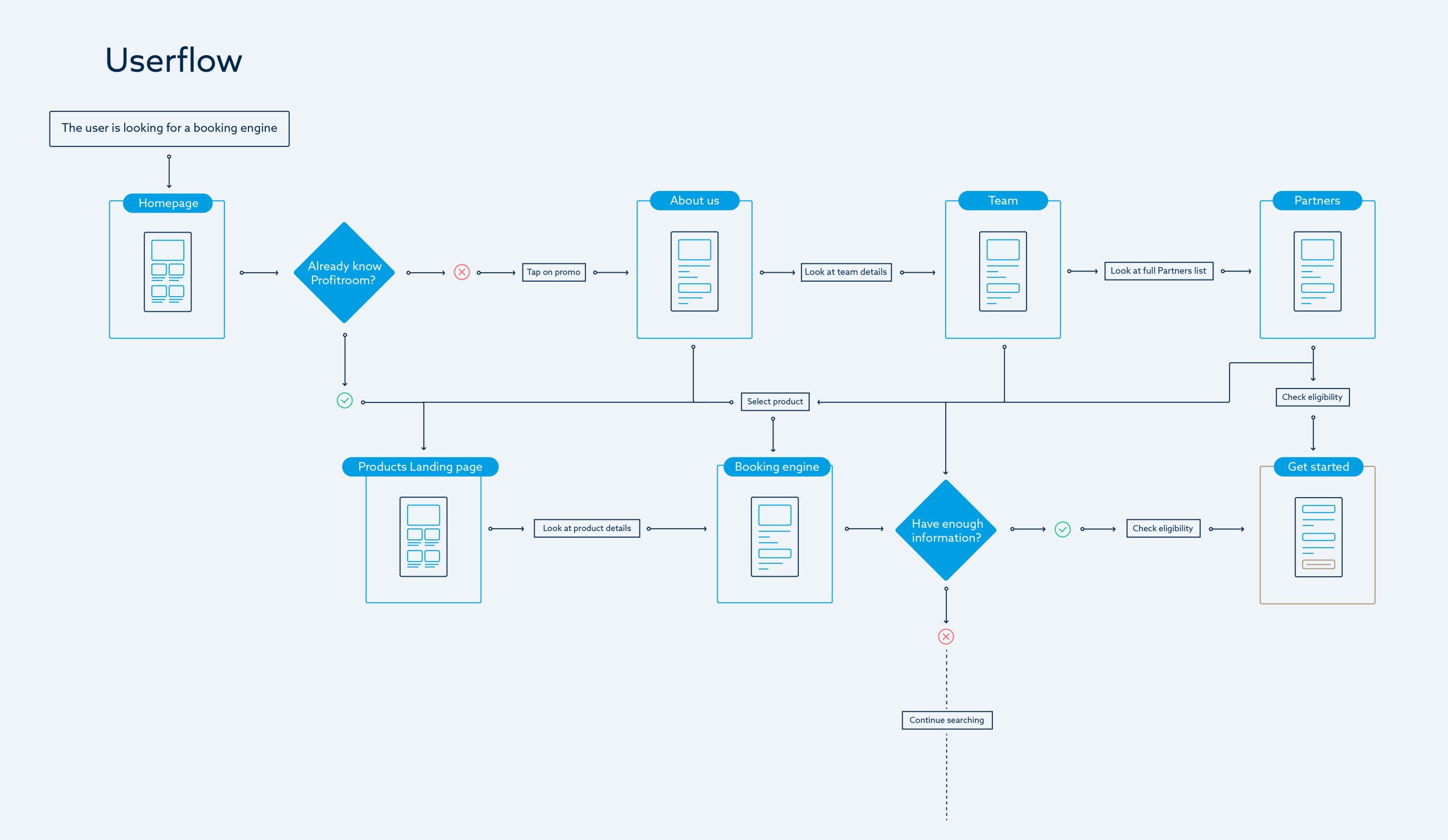
Our goal was to encourage brand conversion and lead generation by understanding the website’s purpose and balancing it with the user’s primary needs. We studied the user flow strategy to look at how we tie user needs and business objectives together. In doing so, we created an experience that delivers the relevant and proper content to the user along their journey through a specified call to action.

Though analytics showed users primarily using desktop, we expanded our strategy for every device and based our designs on our mobile-first approach. The design tends to be more direct on smaller sizes, removing noise and distraction for the user.

Trouble finding
your heart?